

Jicama
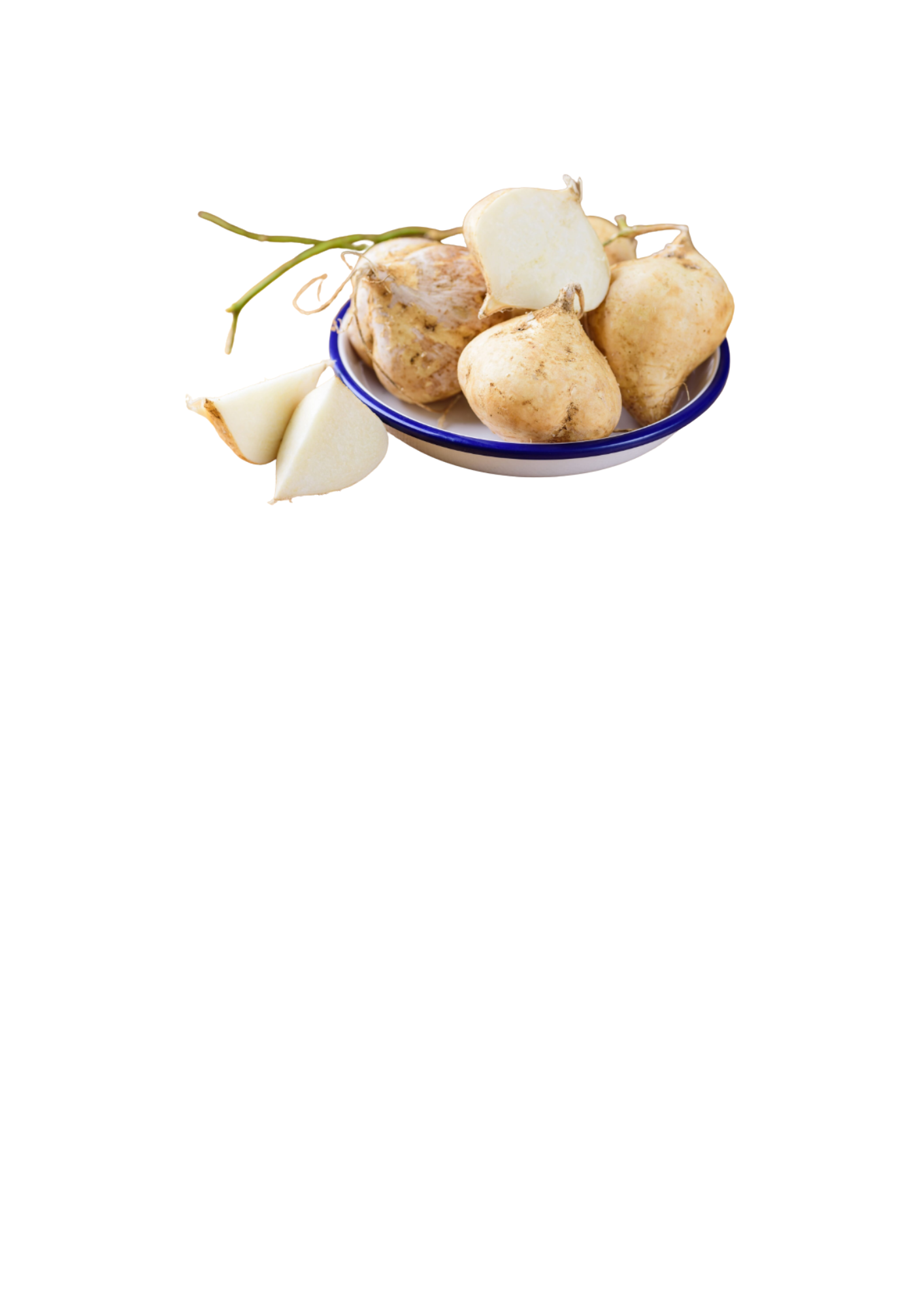
Bengkuang (Pachyrhizus erosus L.) is a tropical root crop widely cultivated in Indonesia and valued for its crisp, juicy texture and naturally mild, slightly sweet flavor. It is commonly consumed fresh and is also used in culinary, food-processing, traditional, and cosmetic applications.
ORIGIN: Native to tropical regions of the Americas, particularly Mexico and Central America, Bengkuang has been introduced and widely cultivated in Southeast Asia, including Indonesia. It grows well in warm tropical environments and is cultivated in various regions of the Indonesian archipelago.
PLANTING: Bengkuang thrives in warm tropical climates with temperatures of approximately 20–30°C, adequate sunlight, moderate rainfall, and loose, fertile, well-drained soil. It is commonly propagated from seeds. The seeds are planted directly into prepared soil, with sufficient spacing to allow proper development of the tuberous roots.
HARVESTING
Timing:
Bengkuang is generally harvested approximately 4–6 months after planting, depending on the variety and growing conditions. The roots are harvested when they have reached a suitable size and maturity while maintaining their characteristic crisp texture.
Method:
The soil around the plant is carefully loosened, and the mature tuberous roots are lifted from the ground. The roots are then cleaned to remove soil, sorted according to size and quality, and prepared for fresh consumption or further processing
PRODUCTS
Fresh Bengkuang:
Fresh tuberous roots supplied to traditional and modern markets, food-service businesses, and fresh produce retailers.
Dried Bengkuang:
Bengkuang that is sliced and carefully dried for use as a processed food or botanical raw material.
Bengkuang Powder:
Dried bengkuang processed into powder for use in selected food, beverage, cosmetic, and botanical formulations.
Bengkuang Extract:
Processed extracts derived from bengkuang for use as a botanical ingredient in selected cosmetic, food, and wellness formulations.
Fresh Culinary Preparations:
Bengkuang is commonly consumed fresh in Indonesian dishes, salads, rujak, pickles, and other traditional preparations.
INDUSTRIES THAT USE IT
Food and Beverage
Widely consumed fresh and used in salads, rujak, pickles, juices, snacks, and various traditional Indonesian food preparations.Food Processing
Used as a raw material for processed foods, dried products, pickles, and other value-added food products.Cosmetics and Skincare
Bengkuang extracts have traditionally been used in Indonesian skincare preparations and may be incorporated into selected cosmetic formulations.Herbal and Traditional Wellness
Bengkuang has been used traditionally as a fresh food ingredient and in various household and botanical preparations.Fresh Produce Industry
Fresh bengkuang is widely traded through traditional markets, supermarkets, restaurants, and food-service businesses.
FUNCTIONS & BENEFITS
Refreshing Food Ingredient:
Its high water content and crisp texture make bengkuang a popular refreshing ingredient for fresh dishes and beverages.
Dietary Fiber Source:
Fresh bengkuang provides dietary fiber as part of a varied and balanced diet.
Culinary Application:
Widely used in Indonesian rujak, salads, pickles, soups, stir-fries, and other traditional food preparations.
Traditional Skincare Use:
Bengkuang has a long history of traditional use in Indonesian skincare preparations and body-care products.
Natural Botanical Ingredient:
Bengkuang provides naturally occurring carbohydrates, dietary fiber, water, and plant compounds that can be utilized in food and selected botanical product development
Bengkuang
Pachyrhizus erosus L.
Indonesia Standard Quality Grade