

STEM SIMPLISIA
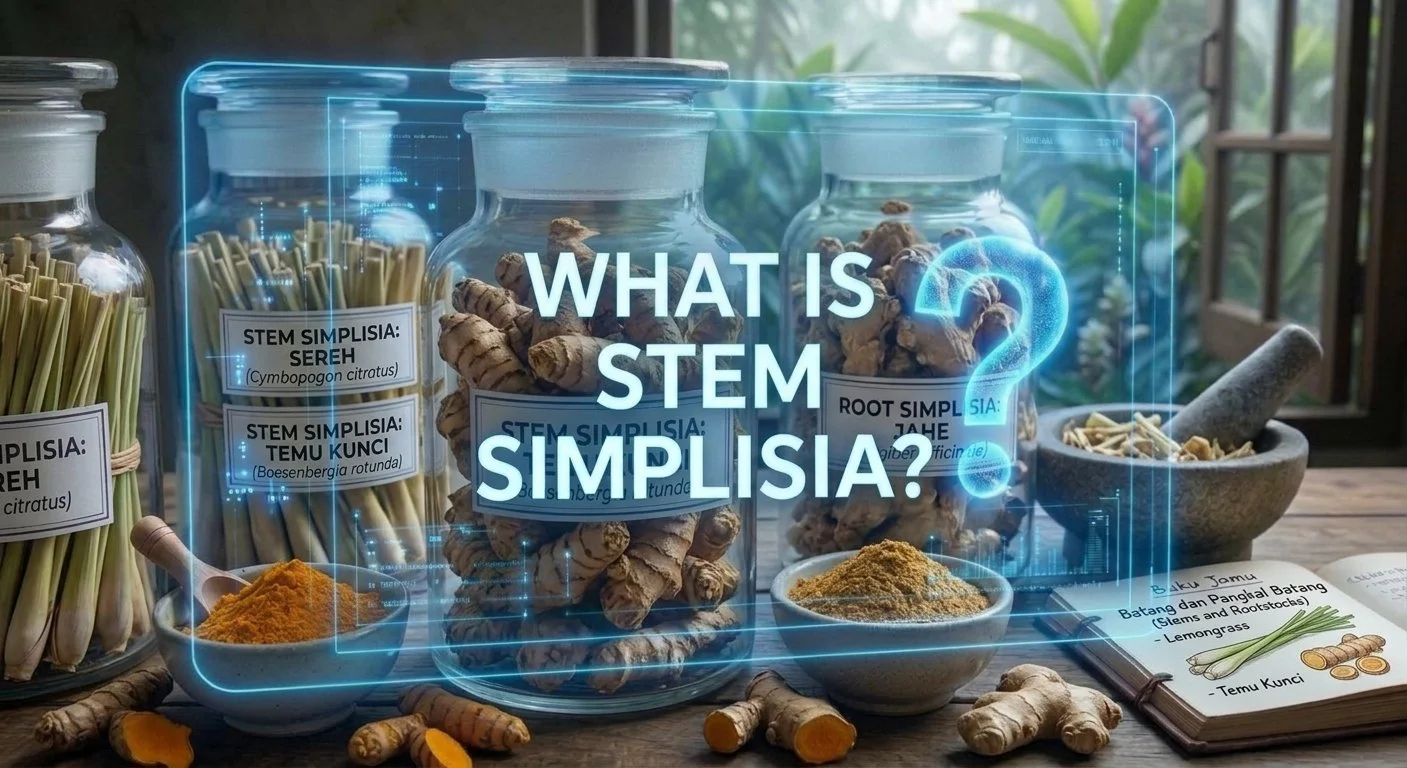
What is Stem Simplisia ?
Simplisia refers to natural materials used as traditional medicines or herbal raw materials that have not undergone processing or changes in form, unless stated otherwise as dried materials.
Meanwhile, rhizome simplisia is a simplisia derived from modified plant stems that grow creeping beneath the soil surface, such as ginger (jahe), lesser galangal (kencur), turmeric (kunyit), temulawak, and greater galangal (lengkuas).
Common Examples and Benefits of Stem Simplisia
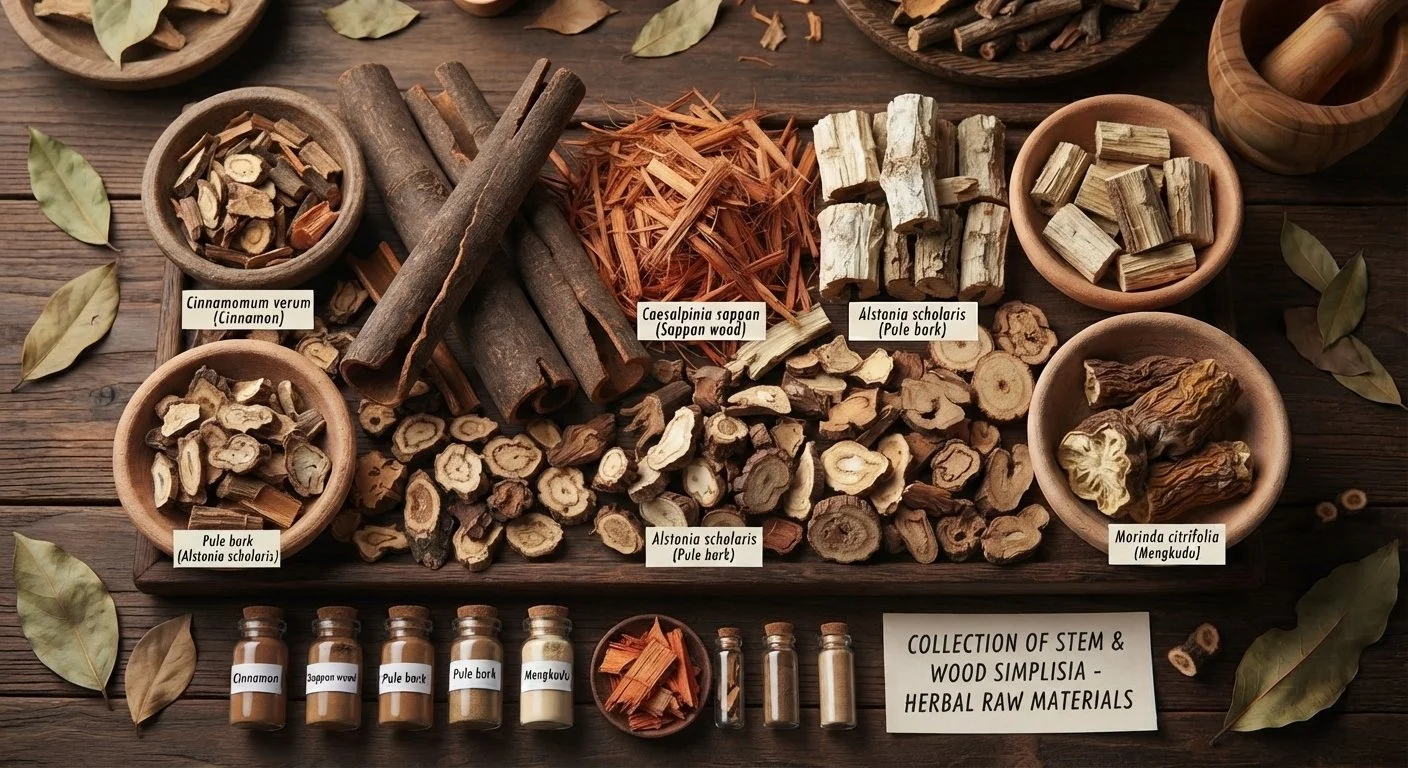
Cinnamon (Cinnamomum verum): The bark or stem parts are frequently used to address digestive issues, lower blood sugar levels, and provide a warming effect on the body.
Sappan Wood (Caesalpinia sappan): The woody stem is utilized as a natural red coloring agent in traditional beverages (such as wedang secang) and possesses high antioxidant content with antibacterial and anti-inflammatory properties.
Pulai Bark (Alstonia scholaris): The bark is traditionally used to relieve fevers, malaria, and stimulate appetite
Stages of Stem Simplisia Production
Similar to rhizome simplisia, the processing of stem simplisia requires specific standards to preserve its active compounds:
Raw Material Collection (Harvesting): Stems or wood are harvested from mature plants, typically during the dry season when the active compounds within the stem are optimally concentrated.
Wet Sorting: Separating the stem or wood parts from attached impurities, moss, or rotted wood sections.
Washing: Cleaned thoroughly using running water to remove remaining soil and dirt.
Slicing / Cutting: Stems or wood are cut into smaller sizes or shaved thinly to accelerate the drying process evenly.
Drying: Dried under direct sunlight covered with a dark/thin cloth or using a drying oven with a controlled temperature (generally below 60°C) until the moisture content is below 10%.
Dry Sorting: Resorting the dried wood pieces to ensure no mold or foreign impurities remain.
Storage: Stored in dry, clean, and tightly closed containers to protect them from moisture and insect infestation.Raw Material Collection (Harvesting): Stems or wood are harvested from mature plants, typically during the dry season when the active compounds within the stem are optimally concentrated.
Wet Sorting: Separating the stem or wood parts from attached impurities, moss, or rotted wood sections.
Washing: Cleaned thoroughly using running water to remove remaining soil and dirt.
Slicing / Cutting: Stems or wood are cut into smaller sizes or shaved thinly to accelerate the drying process evenly.
Drying: Dried under direct sunlight covered with a dark/thin cloth or using a drying oven with a controlled temperature (generally below 60°C) until the moisture content is below 10%.
Dry Sorting: Resorting the dried wood pieces to ensure no mold or foreign impurities remain.
Storage: Stored in dry, clean, and tightly closed containers to protect them from moisture and insect infestation.
Active Compounds Inside Stem Simplisia
The efficacy of herbal stems as traditional medicines and cosmetics stems from their complex biochemical profile, which includes:
Tannins & Polyphenols: Active compounds that provide a strong astringent effect, act as natural antibacterial agents, and protect cells from oxidative damage.
Alkaloids & Flavonoids: Natural pigments and organic compounds that act as high-level antioxidants, free radical scavengers, and anti-inflammatory agents.
Essential Oils: Provide a characteristic aromatic scent and function as natural antimicrobials.
Specific Wood Compounds (such as Brazilin in Secang Wood or Berberine in Bratawali): Unique active substances that provide natural color as well as extraordinary pharmacological benefits for the body and skin.
Major Types of Stem Simplisia and Their Uses
Here are some of the most popular types of stem simplisia in Nusantara along with their primary health benefits:
Secang Wood / Sappan Wood (Caesalpiniae Sappan Caulis)
Key Compounds: Brazilin, flavonoids, and tannins.
Uses: Acts as a powerful antioxidant, free radical scavenger, antimicrobial, and provides a warm, refreshing bodily effect (commonly consumed as wedang secang).
Bratawali Stem (Tinosporae Crispae Caulis)
Key Compounds: Berberine, columbin, and patin.
Uses: Natural fever reducer (antipyretic), helps lower blood sugar levels, and possesses strong antibacterial properties to treat skin infections.
Cinnamon Bark / Stem (Cinnamomi Burmannii Cortex / Caulis)
Key Compounds: Cinnamaldehyde, essential oils, and polyphenols.
Uses: Improves blood circulation, warms the digestive system, and exhibits highly effective antimicrobial activity against acne-causing bacteria.
Pulosari Bark (Alyxiae Reinwardtii Cortex / Caulis)
Key Compounds: Alkaloids, coumarin, and bitter substances.
Uses: Relieves stomach cramps, acts as a diuretic, and serves as an ingredient in traditional anti-fever and fatigue-relieving herbal drinks (jamu).
Cajeput Stem / Wood (Melaleucae Leucadendra Caulis / Lignum)
Key Compounds: Cineole and essential oils.
Uses: Delivers a calming aromatherapy effect, warms the body, and relieves muscle and joint pain.
Revolutionary Potential: Stem Simplisia for Modern Skincare
Beyond being consumed as traditional herbal drinks (jamu), stem and wood extracts are now transforming into innovative active ingredients in the global skincare industry. The "clean beauty" movement embraces stem simplisia for its ability to deeply nurture and protect the skin without the harsh side effects of synthetic chemicals.
Here are the specific benefits of stem simplisia for skincare:
A. Secang Wood (Caesalpinia sappan) for Anti-Aging & Skin Brightening
High Antioxidant Protection: Its brazilin content protects skin collagen from damage caused by daily pollution and UV exposure.
Brightens Dull Skin: Helps even out skin tone and provides a healthy, natural glowing effect to the face.
B. Bratawali Stem (Tinospora crispa) for Acne-Prone Skin (Anti-Acne)
Strong Antibacterial Action: Effectively inhibits the growth of Cutibacterium acnes bacteria responsible for inflamed breakouts.
Soothes Redness: Helps calm irritation and inflammation on sensitive or active acne-prone skin.
C. Cinnamon (Cinnamomum burmannii) for Pore Revitalization
Boosts Micro-Circulation: Optimizes the supply of oxygen and nutrients to facial skin cells.
Natural Pore Cleanser: Helps clear out impurities and excess oil that clog pores.
D. Pulosari Bark (Alyxia reinwardtii) for Maintaining Natural Moisture
Hydrates & Cools: Provides a cool and comforting sensation to skin fatigued by outdoor activities.
Supports Cellular Rejuvenation: Assists the skin regeneration process, leaving it softer, suppler, and more elastic.