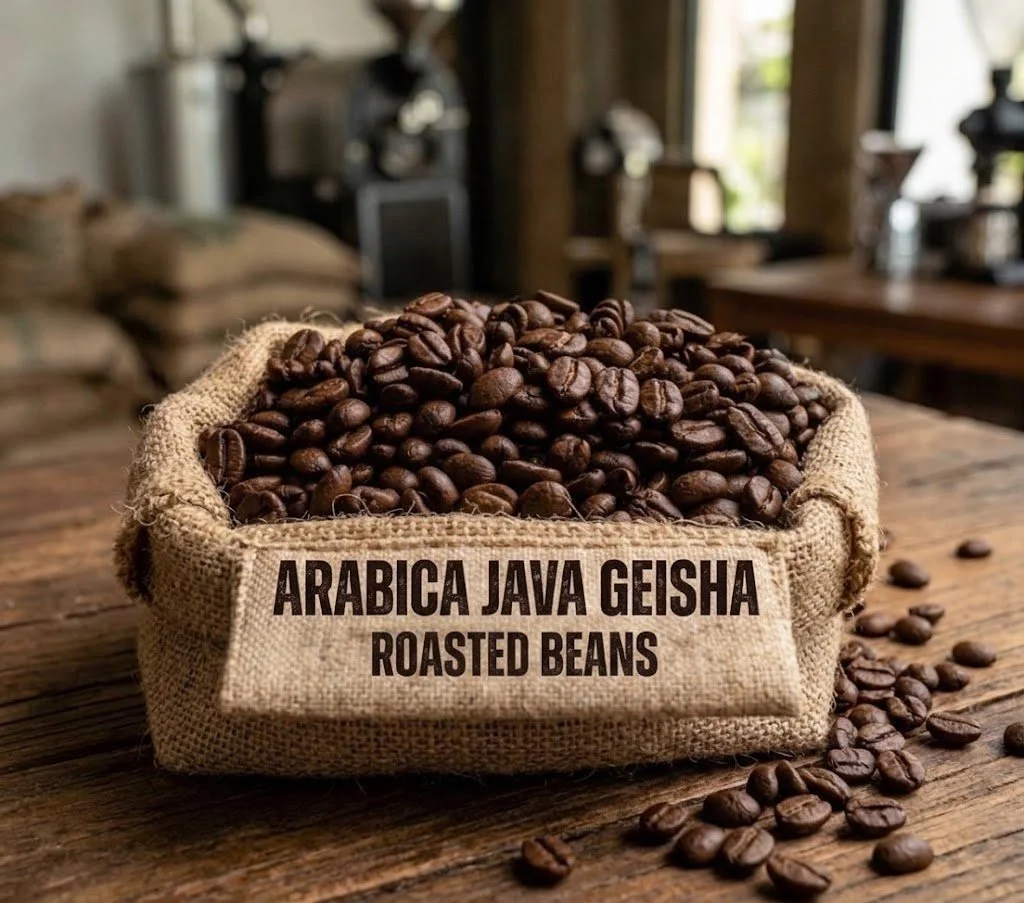

Arabica Java Geisha
Refers to an ultra-premium, highly sought-after Arabica cultivar (Coffea arabica var. Geisha/Gesha) cultivated in the high-altitude volcanic highlands of Java (particularly Mount Puntang, Mount Manglayang, and the Ijen Plateau), Indonesia. Grown at extreme elevations above 1,400 to 1,800 meters above sea level, Java Geisha thrives in rich volcanic soil and cool mountain micro-climates. World-renowned for its distinct elongated bean genetics and delicate floral-tea characteristics, Arabica Java Geisha represents the pinnacle of Indonesian specialty coffee—delivering an intensely aromatic, silky, and tea-like cup with complex jasmine, stone fruit, and bergamot notes.
1. Physical Characteristics of Arabica Java Geisha
Origin and Growing Environment: Cultivated across select ultra-high altitude volcanic regions of Java. The combination of intense sunlight, cool highland temperatures, and nutrient-rich volcanic soil allows the delicate Geisha cherries to synthesize exceptionally high sugar densities and aromatic ester compounds.
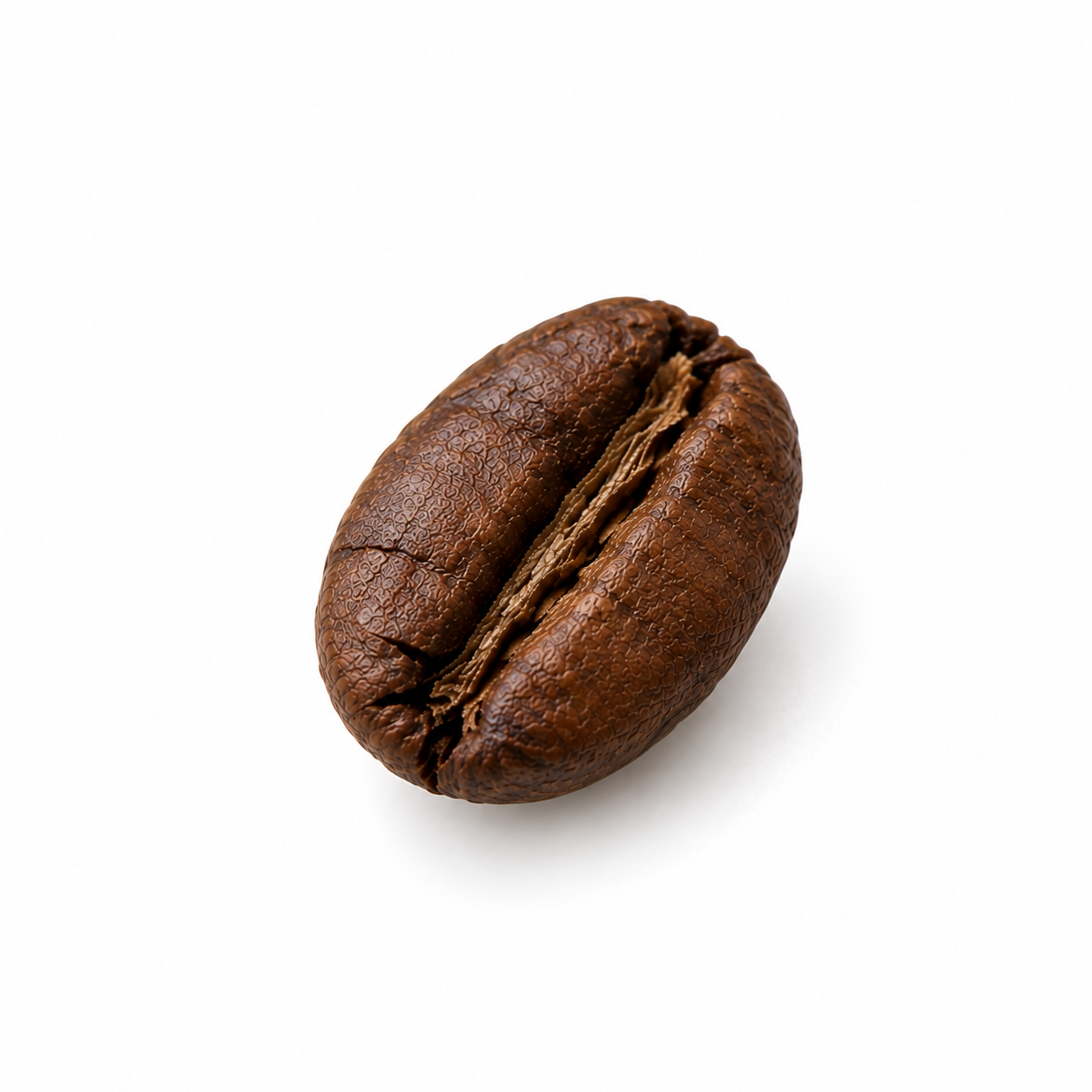
Bean Shape and Size: Beans exhibit the signature Geisha genetic morphology—distinctly long, slender, and narrow ovals with a elegant curved central crease. Sorted strictly to Screen Size 16–18 for precise roasting uniformity.
Color After Roasting: Carefully roasted to a Light or Light-Medium Roast profile. This roast level preserves its delicate floral volatile compounds, sweet citric-malic acidity, and tea-like elegance without introducing any roast-driven bitterness.
Processing Method: Available in Fully Washed (to highlight its pristine jasmine clarity and bergamot acidity), Honey / Anaerobic Natural (to amplify peach, mango, and floral sweetness), or Experimental Fermentation lots.
Aroma: An intoxicating, highly complex floral aromatic profile featuring jasmine blossom, bergamot, orange blossom, Earl Grey tea, peach, and wild honey.
Flavor Profile: A legendary cup profile showcasing jasmine tea, Earl Grey, white peach, bergamot, lemongrass, and sweet dried apricot. It leaves an extraordinarily clean, lingering, and sweet floral finish on the palate.
Body and Acidity: Characterized by a delicate, silky, and tea-like body paired with a vibrant, complex, and sparkling citric-floral acidity.
2. Characteristics and Potential Benefits
Ultra-Premium Exotic Variety: Geisha is widely recognized as one of the most prestigious coffee varieties globally, offering immense marketing value and prestige for B2B export and luxury coffee packaging.
Unrivaled Manual Brew (Pour-Over) Choice: Performs spectacularly in V60, Chemex, and Aeropress, unfolding layered aromatic waves of jasmine, bergamot, and peach as the cup cools.
Delicate Tea-Like Elegance: Offers a smooth, light, and sophisticated drinking experience that appeals to tea connoisseurs and specialty coffee purists alike.
Rich in Natural Antioxidants: Grown in pristine high-altitude volcanic ecosystems, naturally packed with chlorogenic acids and polyphenols.
Showcase of Indonesian Botanical Excellence: Demonstrates the ability of Java's terroir to produce world-class exotic coffee varieties that compete at the highest international levels.
3. Arabica Java Geisha Grades
Grade A (Specialty Microlot / Grade 1 - Auction Grade): Represents the elite selection with minimal to zero physical defects (0–5 points per 300g) and a Cupping Score > 87–90+. Perfectly moisture-controlled (10%–11.5%), delivering the highest purity of jasmine floral aromatics and crystal-clear cup clarity.
Grade B (Premium Specialty / Grade 2): Contains minor physical variations with defect counts between 6–15 points per 300g and a Cupping Score of 83–86. Retains distinct floral and peach notes, making it an exquisite offering for specialty café menus.
Grade C (Commercial Specialty / Grade 3): Allows higher defect counts (16–30 points per 300g) and mixed bean sizes. The delicate floral notes are less pronounced, with stronger tea-like and soft citrus undertones.
Grade D (Off-Grade / Triase): Consists of sorting remnants with noticeable physical defects. Used primarily for commercial blending or traditional markets.