

RHIZOME SIMPLISIA
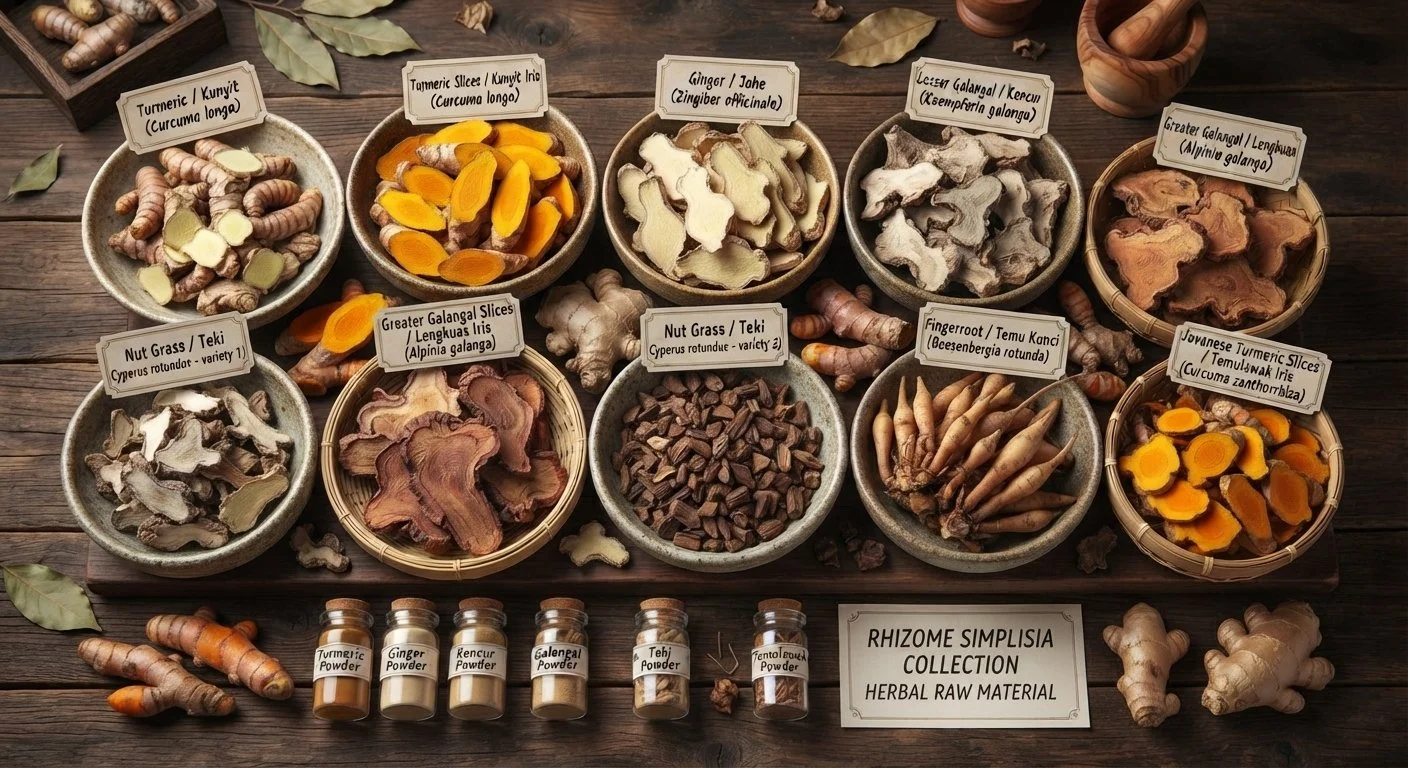
Simplisia refers to natural materials used as traditional medicines or herbal raw materials that have not undergone processing or changes in form, unless stated otherwise as dried materials.
Meanwhile, rhizome simplisia is a simplisia derived from modified plant stems that grow creeping beneath the soil surface, such as ginger (jahe), lesser galangal (kencur), turmeric (kunyit), temulawak, and greater galangal (lengkuas).
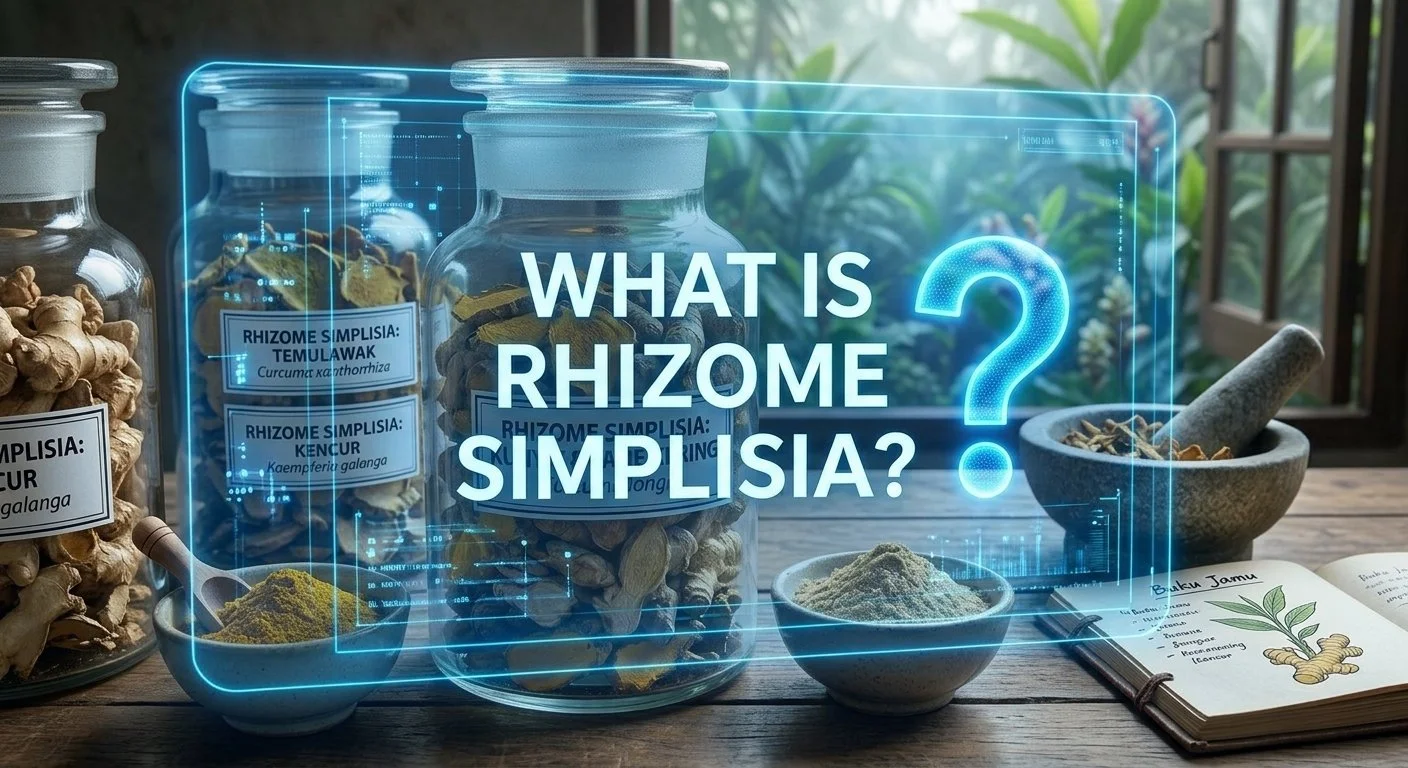
What is Rhizome Simplisia?
Common Examples and Benefits of Rhizome Simplisia
Ginger (Zingiber officinale): The rhizome is efficacious for smoothing digestion, relieving colds, soothing coughs, warming the body, and lowering cholesterol levels.
Lesser Galangal (Kaempferia galanga): Used as a natural cough remedy, appetite stimulant, nausea reducer, and to soothe swelling.
Turmeric & Temulawak: Contain curcumin and essential oils that function as antioxidants, appetite stimulants, and treatments for stomach and digestive disorders
Stages of Rhizome Simplisia Production
To obtain high-quality rhizome simplisia free from germs or mold, the production process goes through several standard stages:
Raw Material Collection (Harvesting): Rhizomes are harvested at the right time, usually indicated by the upper parts of the plant starting to dry and the rhizome reaching its maximum size.
Wet Sorting: Sorting fresh rhizomes to separate impurities such as soil, grass, or damaged/rotted root remnants.
Washing: Cleaned thoroughly using running water to remove remaining soil and attached impurities.
Slicing (Chipping): Rhizomes are sliced thinly and evenly to accelerate the drying process without damaging their active compounds.
Drying: Dried using direct sunlight (covered with a thin cloth) or using a drying machine/oven at a controlled temperature (generally below 60°C) until the moisture content is very low.
Dry Sorting: Resorting dried rhizomes from foreign objects or scorched parts before storage.
Storage: Stored in tightly closed, dry, and clean containers to prevent mold growth or loss of essential oil content.
Active Compounds Inside Rhizomes
The efficacy of rhizomes as natural medicines and cosmetics stems from their complex biochemical composition, which includes:
Essential Oils: Provide a characteristic aromatic scent. They act as natural antibacterial, antifungal, anti-inflammatory, and calming agents.
Curcuminoids: Natural pigments that impart a bright yellow to orange hue (dominant in turmeric and temulawak), acting as powerful antioxidants to combat free radicals.
Specific Compounds (Gingerols, Shogaols, & EPMS): Such as zingerone in ginger or Ethyl p-methoxycinnamic acid (EPMS) in aromatic ginger (kencur), which offer exceptional benefits for skin and bodily health.
Starch and Amilum: Primary carbohydrate components stored within the cellular parenchyma of the rhizome.
Major Types of Rhizome Simplisia and Their Uses
Here are some of the most popular types of rhizome simplisia along with their primary health benefits:
Ginger Rhizome (Zingiberis Officinalis Rhizoma)
Key Compounds: Essential oils, gingerols, and shogaols.
Uses: Warms the body, improves blood circulation, relieves nausea, and alleviates joint and muscle pain.
Turmeric Rhizome (Curcumae Domesticae Rhizoma)
Key Compounds: Curcuminoids and essential oils.
Uses: Natural anti-inflammatory, liver detoxification (hepatoprotector), and aids in supporting healthy digestion.
Javanese Turmeric / Temulawak (Curcumae Xanthorrhizae Rhizoma)
Key Compounds: Curcumin and tumerol.
Uses: Natural appetite stimulant, supports liver function, and promotes cellular regeneration.
Aromatic Ginger / Kencur (Kaempferiae Galangae Rhizoma)
Key Compounds: Cineol, ethyl p-methoxycinnamate, and starch.
Uses: Relieves traditional coughs, treats bloating, and reduces body fatigue (commonly used in traditional beras kencur drinks).
Greater Galangal (Alpiniae Galangae Rhizoma)
Key Compounds: Galangol and camphor.
Uses: Strong natural antimicrobial and antifungal properties, and a staple spice that supports digestive wellness.
Revolutionary Potential: Rhizome Simplisia for Modern Skincare
Beyond being consumed as herbal drinks (jamu) or health supplements, rhizome extracts and powders have become star ingredients in the global skincare industry. The "clean beauty" movement embraces rhizomes for their ability to nurture the skin holistically without the adverse side effects of harsh synthetic chemicals.
Here are the specific benefits of rhizomes for skincare:
A. Turmeric (Curcuma domestica) for Glowing & Spot-Free Skin
Brightens & Evens Skin Tone: Curcumin helps fade hyperpigmentation, acne scars, and dark spots caused by sun exposure.
Anti-Acne: Its antibacterial and anti-inflammatory properties effectively soothe redness in active acne.
B. Aromatic Ginger / Kencur (Kaempferia galanga) for Anti-Aging
Improves Elasticity: Rich in antioxidants and active compounds that help maintain skin firmness, smooth out fine lines, and prevent premature aging.
Natural Oil Control: Helps balance sebum production without leaving the skin feeling dry.
C. Javanese Turmeric / Temulawak (Curcuma xanthorrhiza) for Skin Barrier Repair
High Antioxidants: Protects skin cells from urban air pollution and free radicals.
Smooths Skin Texture: Aids in gentle exfoliation and cellular turnover, leaving skin softer and suppler.
D. Ginger (Zingiber officinale) for Soothing & Revitalizing Effects
Boosts Micro-Circulation: Optimizes the supply of oxygen and nutrients to facial skin cells, providing an immediate natural glow.
Soothes Fatigued Skin: Delivers a refreshing sensation that relaxes tense facial muscles.