

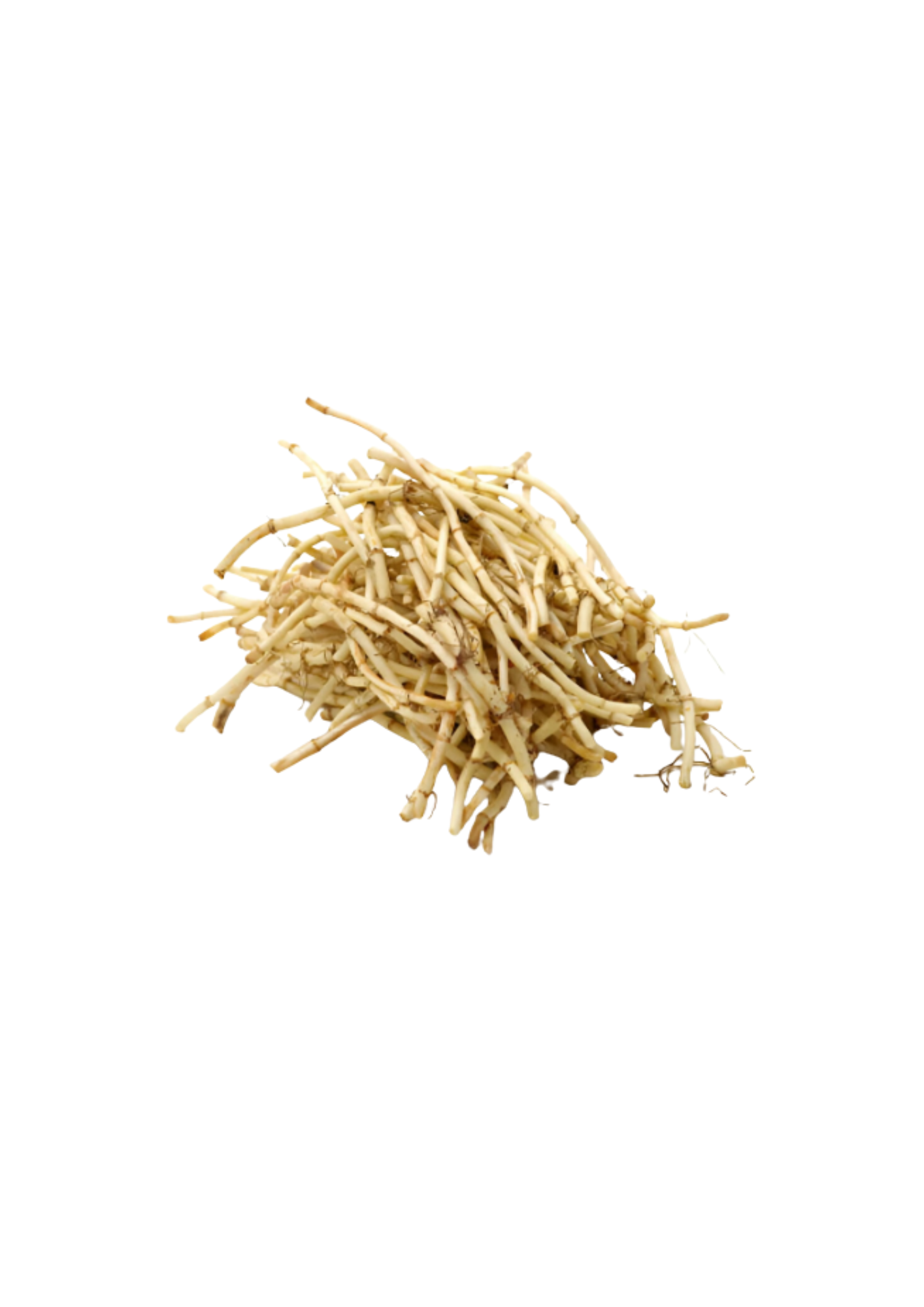
Akar alang-alang (Imperata rhizoma)
Indonesia Standard Quality Grade
Brotowali (Tinospora caulis or Tinospora crispa) is a climbing woody vine renowned in Indonesian traditional medicine for its intensely bitter taste. Its distinctly bumpy, warty stems are the foundational ingredient in jamu pahitan (bitter jamu), heavily relied upon for its potent medicinal and detoxifying properties.
ORIGIN: Native to tropical and subtropical regions of Asia, Imperata cylindrica grows widely across the Indonesian archipelago, particularly in open areas, grasslands, agricultural fields, roadsides, and disturbed land.
PLANTING: Thrives in warm tropical climates with temperatures of around 20–30°C and can tolerate a wide range of soil conditions. It spreads naturally through underground rhizomes and can also be propagated using healthy rhizome sections planted in loose, well-drained soil
HARVESTING:
Timing: The rhizomes can be harvested when sufficiently mature, commonly during the dry season when the soil is easier to work with.
Method: The soil around the grass clumps is carefully dug to expose the underground rhizomes. The roots are collected, washed thoroughly to remove soil, and then prepared for fresh use or drying.
PRODUCTS
Fresh Rhizomes:
Fresh alang-alang rhizomes used as traditional herbal raw material.
Dried Rhizome (Simplisia):
Cleaned, sliced, and dried rhizomes prepared for herbal infusions and traditional medicine.
Rhizome Powder:
Dried and finely ground alang-alang rhizome used as a botanical herbal ingredient.
Herbal Drinks (Jamu):
Traditionally prepared as herbal drinks or decoctions, either alone or combined with other medicinal plants
INDUSTRIES THAT USE IT
Herbal Medicine (Jamu and Phytopharmaceuticals):
Used as a botanical raw material in traditional herbal products and herbal formulations.
Food and Beverage:
Used in traditional herbal beverages and botanical infusions.
Cosmetics and Personal Care:
Potentially used as a botanical ingredient in natural and traditional personal-care formulations.
Traditional Wellness Products:
Used in herbal preparations and wellness products based on traditional Indonesian practices
BENEFITS
Natural Herbal Ingredient
Provides a traditional botanical ingredient with a long history of use in Indonesian herbal practices.Mild & Refreshing Herbal Profile
Traditionally consumed as a decoction or herbal drink with a mild and refreshing character.Premium Herbal Positioning
Suitable as a natural botanical raw material for herbal and wellness products.Consistent Raw Material
Properly cleaned, dried, and processed rhizomes can provide a stable herbal raw material for further formulation.Versatile Application
Available in fresh rhizome, dried simplisia, powder, decoction, and herbal beverage forms.
FUNCTIONS AND BENEFITS
Urinary & Fluid Balance Support:
Traditionally used in Indonesian herbal medicine to support urinary health and help maintain normal fluid balance.
Cooling & Refreshing Effect:
Traditionally regarded as a cooling herbal ingredient and commonly consumed as a refreshing herbal preparation.
Antioxidant Potential:
Contains naturally occurring phytochemical compounds with antioxidant potential.
Traditional Herbal Remedy:
Historically used in traditional medicine for various purposes, including supporting urinary comfort and relieving minor discomfort.
Traditional Wellness:
Often combined with other medicinal plants in jamu and herbal formulations to support general health and wellbeing